
Case study
An HR-tech platform where companies and flexi-jobbers meet.
Codegenie developed a Laravel platform with separate onboarding, matching and management for two audiences.
Context
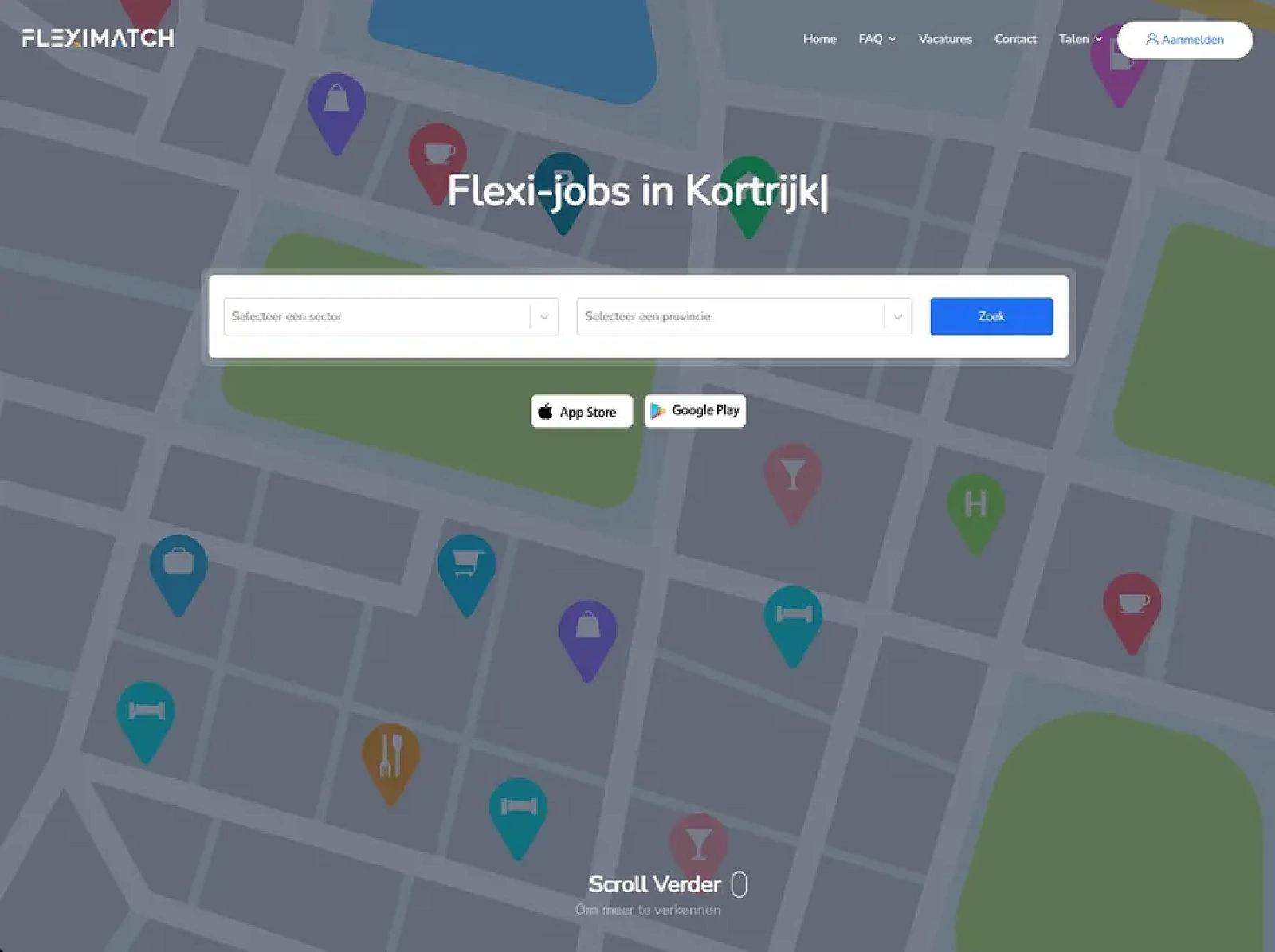
Fleximatch connects companies with flexi-jobbers based on sector, availability and vacancies.
The brief
Let both audiences register quickly, find relevant matches and keep follow-up manageable.
The solution
A Laravel and Livewire application with accounts, roles, onboarding, matching, messaging, payments and controlled releases.
From a visit to the next step
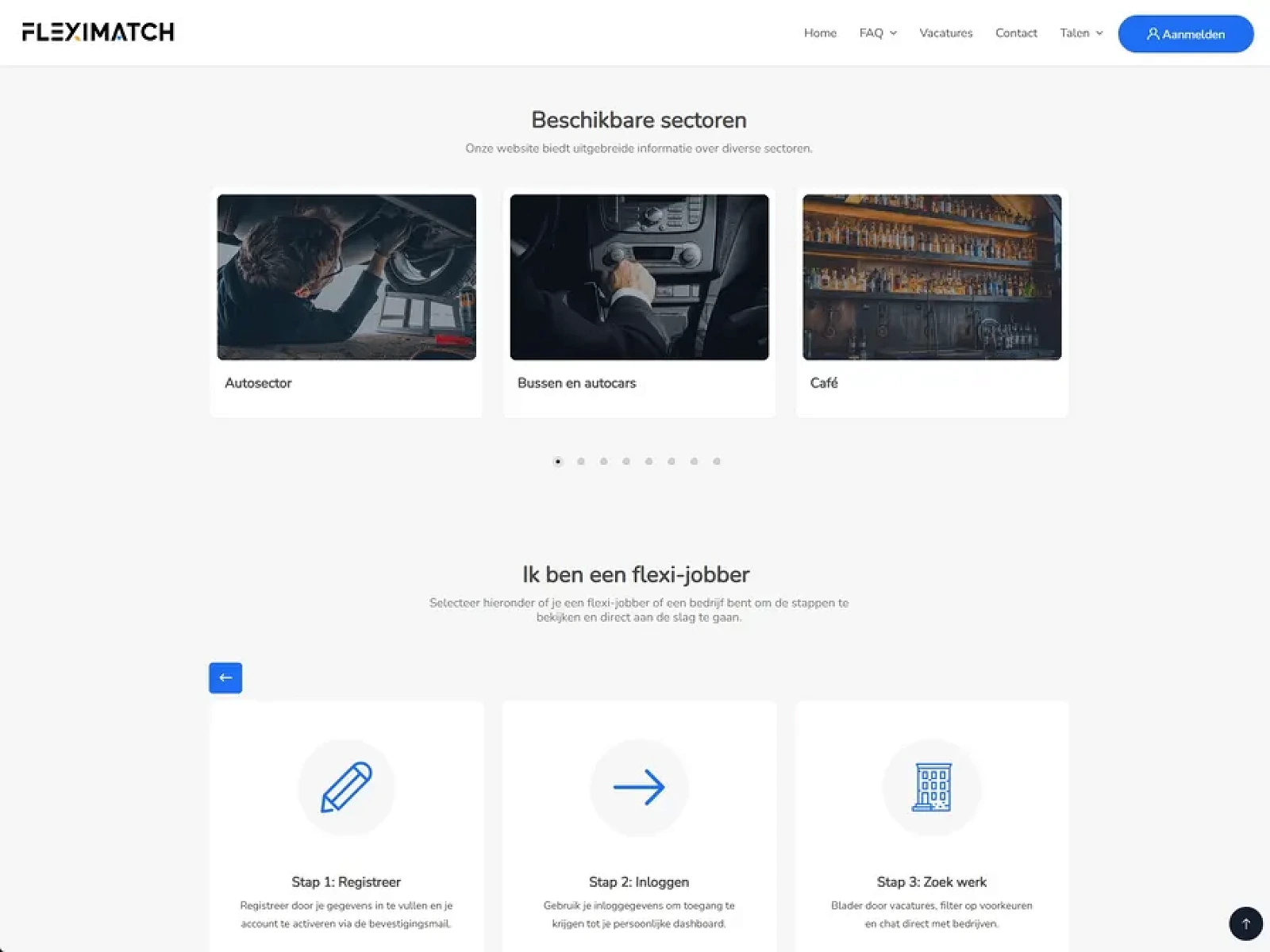
Fleximatch serves two different user groups. The journey therefore starts with the user’s role rather than sending everyone through the same general registration form.
- 1. A business or flexi-job worker follows the relevant onboarding route.
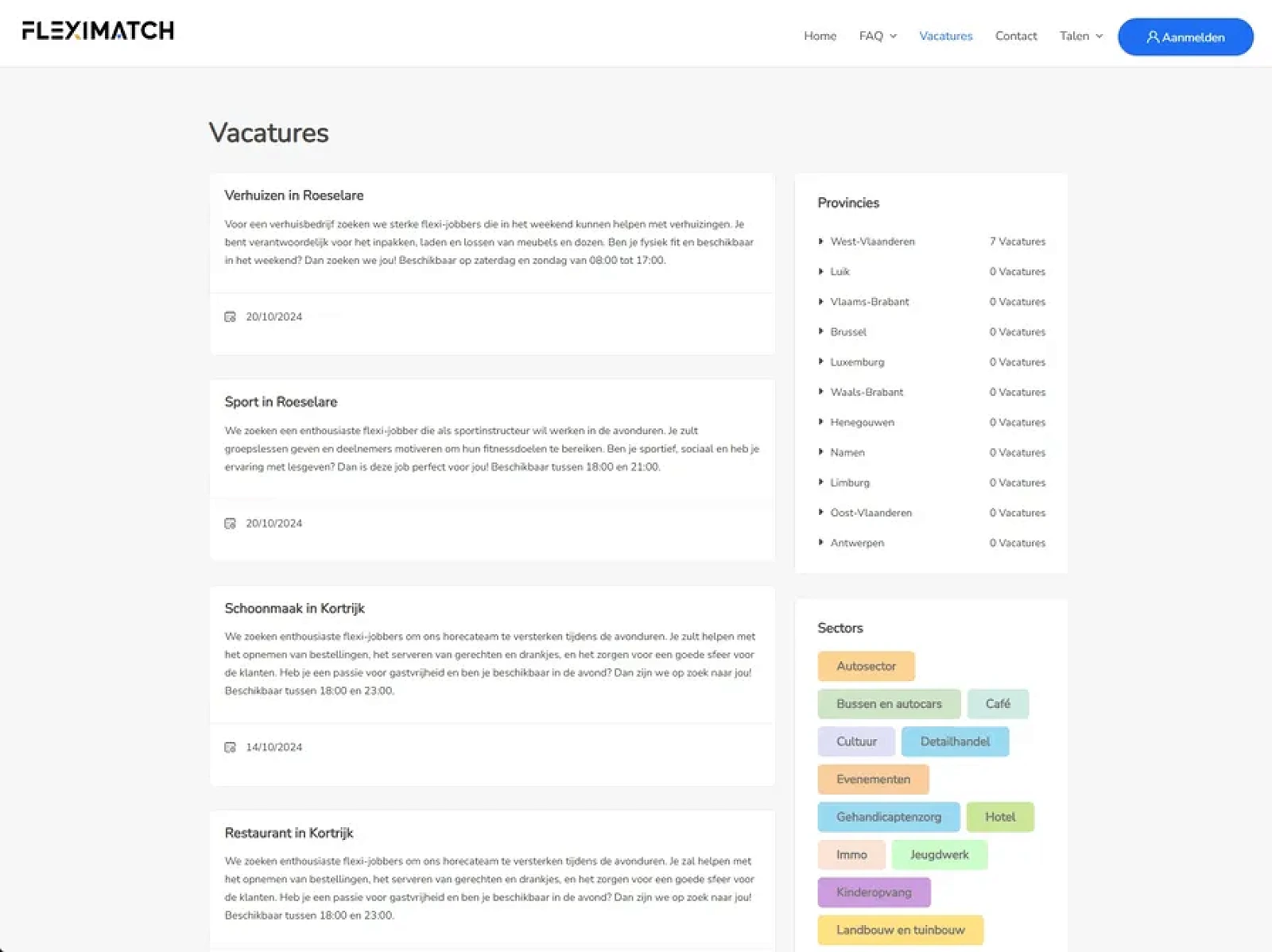
- 2. Profile, sector, availability and vacancy context inform matching.
- 3. Vacancies, messages and management support follow-up on relevant matches.
The gallery shows registration and vacancy filters. This case illustrates role-based application development; it is not a recruitment offer by Codegenie.
Technical detail: two roles, different onboarding.
The technical choices below are based on the described project flow. The checkpoints are examples of appropriate validation, not a published test report or a measured performance improvement.
The technical challenge
Businesses and flexi-job workers use the same platform but supply different information. Sector, availability and vacancy context must come together usefully without forcing both groups through identical registration steps.
The documented choice
Codegenie built separate onboarding flows in Laravel and Livewire for businesses and flexi-job workers, with matching based on sector, availability and vacancy context. Profiles, vacancies and administration support follow-up.
The trade-off
One general registration form would also need explanations and fields intended for the other group. Separate journeys clarify each role’s task, but still require consistency between shared profile data and the information used for matching.
Checkpoints for this flow
Relevant scenarios include an incomplete profile, missing availability, a sector without a suitable vacancy and a user attempting an action intended for the other role. Check data and access rules, not just whether the expected screen appears.
Key elements
- 01Separate company and worker onboarding.
- 02Availability and sector matching.
- 03Profiles, vacancies, notifications and management.
- 04Stripe payment flow and CI/CD base.
Approach
- 01
Define user flows and essential data.
- 02
Build a mobile-first onboarding UI.
- 03
Implement matching and management iteratively.
- 04
Validate security, performance and releases.
Delivered solution
A maintainable web application with a clear path from registration to match for both audiences.
Discuss a similar project
Briefly explain where you are today and what should improve. You will receive a concrete response about the most logical next step.