Skip to the main content
{}

Business website development

A business website that explains why customers should contact you.

Codegenie builds websites for small businesses and independent professionals. Your services, customer questions and intended contact step determine the pages and functionality.

What size of website fits your business?

These are illustrative starting points, not fixed packages. Delivery is defined in pages, content, languages, features and management. You provide your offering, service area, logo and available text and images; missing content is agreed separately.

Compact business website

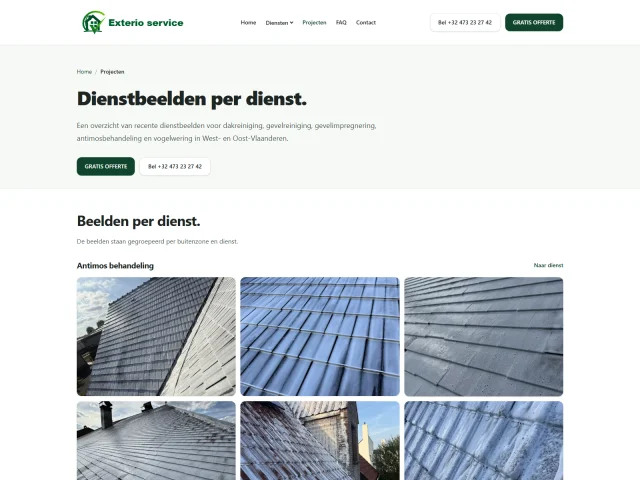
A homepage, clear services, real completed work and one contact route may be enough to explain your offering. Exterio Service shows how services and project images support each other; the case is a content reference, not a standard package.

View Exterio Service
Larger service website

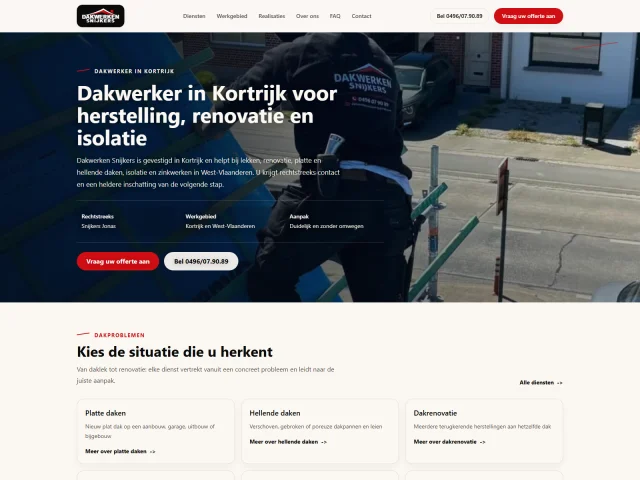
Different services get their own explanations, relevant completed work and logical next steps. More pages also mean more content and checks. Dakwerken Snijkers shows an existing site with services and separate roofing projects.

View Dakwerken Snijkers

Website with editing or features

Decide what you want to edit and which feature is actually needed, such as a filter or calculation. Instructions, access rights and checks belong to that scope. Development and content are one-off costs; hosting, domain, mailboxes, licences and maintenance are identified separately.

Request a website proposal
Compare project types and costs in the pricing guide

What the work includes

01

Content that explains the offer

Decide which pages are needed, what material you supply and where copywriting or photography is required separately. Services and project evidence have a clear place.

02

Design the entire visitor journey

Develop service pages, mobile use and the enquiry form, not just a homepage. The main action fits the page: call, request a proposal or review a case.

03

Content management and useful interaction

Include a CMS, calculator, filter or integration only when needed. Specify what you can edit and what later changes require separate work.

04

A clear handover

Scope the pages, form checks, metadata and handover. Identify hosting, domain, mailboxes, maintenance and further content separately.

Business website, dynamic site or application?

A service website informs and collects enquiries. Dynamic content comes from managed content or data. A web application supports roles and business processes. Choose the smallest suitable solution.

  • 01Review actual case websites before choosing your project scope.
  • 02Keep your existing domain and useful content where appropriate.
  • 03A technical SEO foundation is not a promise of a fixed Google position.

Compare related options

These pages address the same underlying question and help you choose the right project scope.

Approach

From brief to delivery

Scope and responsibilities are clarified first. We then build and verify the solution in controlled steps.

  1. Brief

    Discuss the offer, audience, existing site and intended enquiries.

  2. Proposal

    Define content, pages, design, administration and costs.

  3. Build

    Implement and review the main visitor journeys.

  4. Handover

    Verify forms, publication and agreed administration.

Frequently asked questions

How much does a website cost?

Content, pages, languages, design, administration and features determine the price. A scoped quote is more useful than a starting price without deliverables.

Can I extend it later?

Within the capabilities of the chosen foundation. Later extensions are not automatically included and are discussed as new scope.

Do I supply copy and photos?

Agree which material is available and who supplies the gaps. Copy editing, translations and professional photography are not silently assumed to be included.

Which website fits your business?

Explain your offer, available content and the action visitors should take.